



15,893
Deliverd orders


With internationally recognised universities, research-led teaching and strong career outcomes, the United Kingdom remains one of the most preferred study destinations for international students. However, UK education is expensive because students must manage tuition fees, accommodation, visa costs, health surcharge, travel, books and daily living expenses.
The typical tuition expenses for overseas students vary from:
Undergraduate courses: £11,000 – £25,000 a year
Postgraduate programmes: £12,000 – £35,000 per year
Medical & MBA programmes: may cost £40,000 a year or more
Students would also have to pay living expenditures of about £12,000 - £15,000 a year (outside London) and more in London, in addition to their tuition fees.
In 2026, international tuition fees can vary widely depending on the university, course and level of study. This is why free education in UK usually does not mean “zero cost for everyone”. It often means full scholarships, tuition-fee waivers, stipends, bursaries, grants or funded programmes that reduce the financial burden.
If you are wondering how to get free education in UK, this guide explains scholarships, eligibility, UK government references, university funding options and practical ways to improve your chances.
Many students ask who is entitled to free education in UK, but the answer depends on fee status, scholarship eligibility and funding rules. International students are usually charged overseas tuition fees, so they normally need scholarships or grants to study at a reduced cost. Students who may qualify include:
High-merit students with strong academic records
Students from eligible scholarship countries
Refugees, asylum seekers or students with humanitarian protection
Students applying for need-based grants
Students with strong sports, arts, research or leadership profiles
Postgraduate applicants applying for government-funded scholarships
So, who is entitled to free education in UK is not based on one rule. It depends on nationality, academic record, course level, university policy and scholarship terms.
UK education is costly because international students usually pay higher tuition fees than home students. Costs may include:
Tuition fees for undergraduate or postgraduate courses
Accommodation and living expenses
Student visa application charges
Immigration Health Surcharge
Course materials, travel and insurance
London-based living costs, which are usually higher
This is why free education for international students in the UK is mainly possible through scholarships, fellowships, grants and university-funded awards.
Students searching for how to get free education in UK should check official university scholarship pages first. Some UK universities offer full or partial awards for international students.
University of Oxford
You can check University of Oxford website for “How can I get free education in the UK?” Oxford offers funding routes such as the Rhodes Scholarship and Clarendon Scholarships for eligible students. These awards are highly competitive and usually require strong academic excellence, leadership potential and a clear study plan.
University of Cambridge
Cambridge offers scholarship opportunities such as Gates Cambridge Scholarships for outstanding graduate applicants. Students should check course-specific and college-based funding as well.
Imperial College London
Imperial College London is a well-known university for science, engineering, medicine, and business. President’s PhD Scholarships are available to international students, along with Indian students, who can study for free.
London School of Economics and Political Science (LSE)
LSE is a reputable university where many students from across the world, including Indian students, come to study the social sciences. Getting a free education is easy for meritorious students, who can apply for the John C Phelan General Course Scholarship, which is available for all, including Indian students.
Several official scholarships can support free education for international students in the UK. The most recognised options include:
| University | Scholarship/Grant | Benefits |
|---|---|---|
| University of Oxford | Rhodes Scholarship | Covers all expenses for postgraduate study, for only outstanding international students. |
| University of Cambridge | Gates Cambridge Scholarships | Fully funded for graduate study and students did research in any subject. |
| Imperial College London | President’s PhD Scholarships | Funding for PhD programs, such as tuition fees and a stipend for living expenses. |
| London School of Economics (LSE) | The Beacon Scholarship | Offers significant tuition fee reductions for undergraduate students from East Africa. |
| University of Edinburgh | Edinburgh Global Research Scholarship | 30 scholarship students cover the difference between domestic and international tuition fees. |
| University of Manchester | GREAT Scholarships | Offers scholarships in partnership with the British Council targeted at students from several countries, including India, covering tuition fees. |
| University of Bristol | Think Big Postgraduate Scholarships | Provides grants up to £20,000 covering tuition fees for postgraduate international students. |
| University of Birmingham | India Outstanding Achievement Scholarships | Awards scholarships of £2,500 to Indian undergraduate students based on academic and extracurricular excellence. |
Students asking who is entitled to free education in UK should prepare early because scholarship committees review academic and personal evidence carefully.
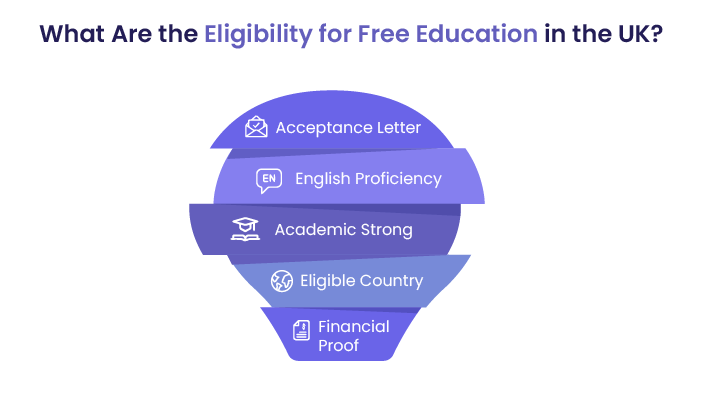
Common requirements include:
University offer letter
Strong academic record
English language proof such as IELTS, TOEFL or accepted waiver
Statement of Purpose
Letters of recommendation
CV or academic profile
Proof of financial need, if required
Research proposal for postgraduate or PhD funding
Eligible nationality or country status
Scholarships are competitive, so students should avoid last-minute applications.
Winning a UK scholarship requires planning, evidence and a strong application. To improve your chances:
Maintain consistent grades and highlight awards, research, projects, internships or leadership roles.
Your SOP should explain your academic goals, career plans, course choice and contribution to your home country.
Choose referees who know your academic ability, research skills, leadership qualities and personal discipline.
Scholarship deadlines often close months before course intake. Track deadlines for September, January and limited summer intakes.
Improve Academic Documents
Students often use Assignment Help, Dissertation Help or Essay Writing Services to improve academic writing, application drafts, SOP structure or research documents.
The main UK intake is September/October, but some universities also offer January/February intake. A few courses may have summer intake.
| Intake Period | Duration/Month | Common Scholarship Application Deadlines |
|---|---|---|
| Autumn Intake | September/ October | Scholarship applications for this intake usually close between December and March of the previous academic year. |
| Winter/Spring Intake | January/February | Deadlines for scholarships for the winter intake generally fall around September to November of the previous year. |
| Summer Intake | May/June | Scholarships for the summer intake, if available, often have deadlines by the end of the previous year or early in the current year |
The main UK intake is September/October, but some universities also offer January/February intake. A few courses may have summer intake. Students aiming for free education in UK should start researching 9–12 months before the course begins.
Scholarship planning should also include visa requirements. For a UK Student visa, applicants generally need to show money for course fees and living costs unless exempt. Current UK government guidance also limits dependant eligibility for most students, except certain postgraduate research students and government-funded scholarship students. This means free education in UK planning should include:
Tuition-fee funding
Living-cost funding
Visa application fees
Health surcharge
Dependant rules, if applicable
University scholarship deadlines
Getting free education in UK is possible, but usually through competitive scholarships, university grants, tuition waivers or government-funded awards. Students should research official sources, shortlist suitable universities, prepare strong documents and apply before deadlines.
If you are still wondering how to get free education in UK, start with British Council scholarship pages, UK government scholarship routes and official university funding pages. With early planning and a strong academic profile, free education for international students can become more achievable.






© Copyright Quick Assignment Hub All rights reserved.